















Following Moscow’s large-scale invasion of Ukraine, Lithuania has terminated almost all bilateral agreements with Russia and its supporter Belarus. However, President Gitanas Nausėda has yet to submit to the Seimas a decision on the denunciation of the treaties with the two countries on investment promotion and protection.
The government took its decision to denounce treaties that protect Russian and Belarusian investments in Lithuania or Lithuanian investments in those countries on May 22. Since then, the president has been waiting to present these treaties to the parliament for denunciation.
Ridas Jasiulionis, the president’s communications adviser, told LRT.lt that Nausėda will submit the proposal to denounce the treaties to the Seimas “in the near future”, but did not specify the exact timeframe.
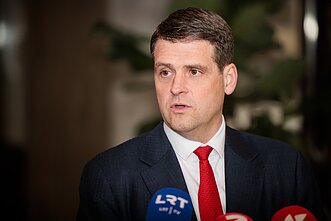
According to Deputy Seimas Speaker Žygimantas Pavilionis, the president’s delay in resolving the treaty denunciation issue seems suspicious and raises many questions.
He recalled that the conclusions of the Seimas’ Whistleblower Commission stated that persons related to Belarusian fertiliser business could have had an influence on the president.
“This is worrying and suspicious. [...] The documents were sent to the President’s Office in the spring. Does it take so much time to study and understand that Russian and Belarusian investments are damaging to Lithuania? This raises certain questions,” Pavilionis said.
“As you know, some concerns about the influence of certain business groups on certain individuals have also been raised during the investigation in the Seimas. I would not like to believe that this influence continues,” he added.

In June, MPs endorsed the conclusions of a temporary Seimas commission that investigated the information provided by a State Security Department whistleblower, which stated that President Nausėda was vulnerable due to his former advisors’ contacts with representatives of Belarusian fertiliser businesses, as well as the Russian and Belarusian special services.
Lithuania has already terminated a number of bilateral agreements with Russia and Belarus, but not all of them follow the same procedure. For example, some treaties are terminated by a government resolution, but in cases where the treaty has been ratified by the Seimas, the Law on International Treaties requires the president to submit to the Seimas a proposal to denounce the treaty, either on his own initiative or on a proposal from the government.
When a country decides to terminate a bilateral treaty unilaterally, it usually has to give 12 months’ notice to the other party. This means that the treaty will remain in force for another year, even after the parliament’s decision. Investments made during the term of the treaty are still protected for 10 years after termination.
According to political rumours, the Russia and Belarus treaties were submitted to the president at the same time, as there are suspicions that Nausėda would immediately denounce the treaty with Russia but not with Belarus.
Allegedly, these doubts have to do with Belarusian fertiliser maker Belaruskali’s fear of losing its assets in Lithuania, since it still owns a 30 percent stake in Birių Krovinių Terminalas, a stevedoring company in Klaipėda Port, despite the existing EU sanctions.

Belaruskali uses the agreement on investment promotion and protection as an argument in court disputes with Lithuanian authorities.
On Tuesday, Seimas Speaker Viktorija Čmilytė-Nielsen said she had received confirmation that Nausėda will soon submit to the parliament a proposal to denounce the investment promotion and protection treaties with Russia and Belarus.
“I have received confirmation that the drafts will reach the Seimas in the near future,” she said.
Asked whether the president was delaying the submission of these treaties for denunciation, she answered that “the president should be asked this question”.

Newsletter
Every Friday morning.